
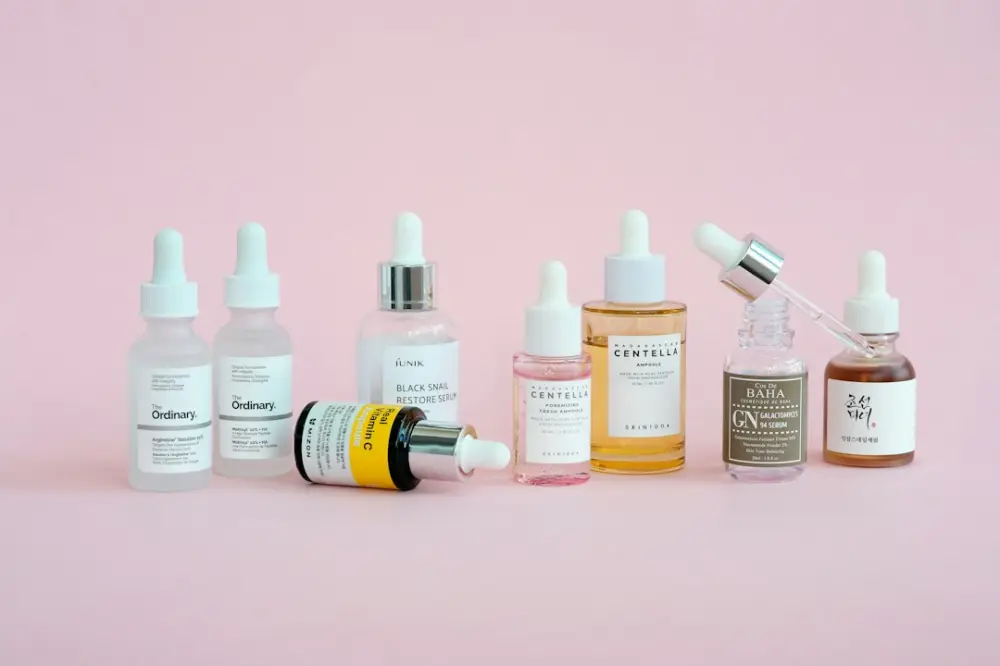
Choosing skincare information critically involves analyzing product claims, ingredient lists, and marketing promises rather than buying on impulse. It requires assessing whether a formula suits your specific skin type, fits your long-term budget, and avoids redundant active ingredients already present in your routine to ensure skin safety and financial sustainability.
For a professional managing a high-stress schedule, skincare shouldn't be another source of decision fatigue. Instead of chasing the latest trend seen on a social media feed, a critical approach focuses on performance-driven results. This means looking past the packaging to understand how a specific product interacts with your unique biology and daily habits.
Why You Need to Evaluate Skincare Information Critically
The men’s grooming market has expanded rapidly, bringing with it a wave of sophisticated marketing that often prioritizes aesthetic appeal over formulaic integrity. When you see a product marketed with terms like "rugged," "age-defying," or "clinical strength," these are often editorial choices rather than regulated medical claims. Evaluating this information critically allows you to separate the branding from the actual biological impact on your skin.
Consider the rise of "charcoal-infused" products. While charcoal is effective in a clinical setting for toxin absorption, its presence in a face wash that stays on your skin for thirty seconds may be negligible. A critical consumer looks for the concentration of the ingredient and its placement on the International Nomenclature of Cosmetic Ingredients (INCI) list. If the "hero" ingredient is listed after the preservatives or fragrances, it is likely there for marketing purposes rather than performance.
Assessing Long-Term Affordability and Repurchase Value
High-performance skincare is not a one-time event; it is a cumulative process. A common mistake is investing in a premium serum that costs $200 for a 30ml bottle without considering if that expense is sustainable every six to eight weeks. If the price point forces you to use less than the recommended amount, or to skip days to "save" the product, you are compromising the efficacy of the treatment.
When evaluating a new addition to your shelf, calculate the cost-per-use. For example, a high-quality, large-format cleanser might have a higher upfront cost but a lower daily cost than a smaller "luxury" tube. Critical evaluation means choosing products that fit your financial reality so that you can maintain the consistency required for long-term health, especially when managing the skin changes associated with andropause and hormonal shifts.
Checking Your Current Inventory for Formula Redundancy
Before adding a new step to your morning, it is essential to simplify an overcomplicated skincare routine by auditing what you already own. Many modern formulations are multi-functional. A moisturizer might already contain niacinamide, hyaluronic acid, and antioxidants. Adding a separate niacinamide serum on top of that moisturizer doesn't necessarily double the benefits; instead, it increases the risk of irritation and wastes money.
Take a physical inventory of your bathroom cabinet. If you have three different products that all claim to "brighten," look at the active ingredients. If all three rely on Vitamin C (Ascorbic Acid), you are dealing with redundancy. A critical eye helps you identify these overlaps, ensuring that every product in your rotation serves a distinct, necessary purpose.
Verifying Active Ingredients Against Your Existing Routine
Compatibility is the most overlooked aspect of skincare literacy. Some active ingredients work in synergy, while others cancel each other out or cause significant barrier damage when used together. For instance, using a high-percentage Retinol alongside a strong Alpha Hydroxy Acid (AHA) exfoliant can lead to chemical burns or extreme sensitivity for those not accustomed to such a potent combination.
A practical scenario involves the use of prescription-strength topicals. If you are using a dermatologist-prescribed retinoid for acne or anti-aging, adding an over-the-counter "resurfacing" peel could be disastrous. Critical information gathering involves checking the pH requirements of your products and ensuring your routine doesn't become a volatile experiment on your face. You want a cohesive system, not a collection of competing chemicals.
Matching Product Claims to Your Specific Skin Concerns
Marketing is designed to be broad to capture the largest possible audience, but your skin is specific. A product labeled "for all skin types" is often a compromise. If you have oily, acne-prone skin, a rich, oil-based cream marketed as a "universal hydrator" will likely lead to clogged pores and breakouts, regardless of how many positive reviews it has.
Identify your primary concern—whether it is dehydration, fine lines, or redness—and look for ingredients targeted at that specific issue. If you are a busy professional dealing with the dullness that comes from frequent travel and lack of sleep, you need ingredients like caffeine or stabilized Vitamin C, not just a generic "men's face cream." Matching the tool to the task is the hallmark of a critical consumer.
Filtering Reviews to Find Relevant Skin Comparisons
User reviews are a valuable resource, but only if filtered correctly. A five-star review from a twenty-year-old with resilient skin is irrelevant to a fifty-year-old man dealing with thinning skin and sun damage. When reading reviews on retail sites, look for descriptors that match your own profile: age, skin type (oily, dry, combination), and even the climate they live in.
A "heavy" moisturizer might get one-star reviews from people in humid environments like Florida, but it could be exactly what you need if you spend your days in a dry, air-conditioned office in London or New York. Ignore the emotional language of the review ("I love the smell!") and focus on the functional feedback regarding texture, absorption, and visible changes over a period of at least four weeks.
Building a High-Performance Routine Without the Hype
Building a routine that actually works requires a systematic approach rather than an emotional one. For the modern man, this means moving away from the "more is better" mentality and toward a performance-based strategy that respects both time and biology. Follow these steps to refine your selection process:
- Define your primary goal: Focus on one major concern at a time, such as sun protection or texture refinement.
- Audit your current shelf: Remove any products that have expired or serve the same function as a superior product you already use.
- Cross-reference ingredients: Ensure new additions don't conflict with your existing actives.
- Test for two weeks: Introduce only one new product at a time to monitor how your skin reacts.
- Prioritize consistency: Choose products you can afford and enjoy using daily.
At Profile By Rob Lowe, we advocate for this level of health information literacy because skincare is a component of overall wellness and longevity. By learning to look past the buzzwords and focusing on the underlying science, you can develop a skincare for busy professionals: a performance-based routine that supports your skin through every stage of life, including the nuances of andropause and the demands of a high-level career.
Profile By Rob Lowe provides general information only. This article is not medical advice, diagnosis, or treatment. Do not use this article as a substitute for advice from a qualified healthcare professional. Always consult your doctor, physician, or clinician before starting, stopping, or changing medication, supplements, diet, or any treatment plan.